Thursday, September 15, 2022

Dog Class

"I am writing to remind you, dear friends, that we should love one another. This is not a new commandment, but one we have had from the beginning."

2 John 1:5 NLT


If you have been to my house at any time in the last 11 years, chances are you've been greeted by my little dog, Dixie. Either in "person" or vocally from her kennel in the other room. She has an issue with barking at strangers, especially strange dogs. This wasn't really an issue until March of 2018, when we adopted back a dog whom we had raised to be a service dog. This new dog, Cambria, had just retired from service, and, as her "puppy raisers" my family was offered the chance to take her into our home again. We said yes.

Everyone was on board with this plan. Everyone, that is, except Dixie. No matter how much we tried to convince her to get along, she had chosen to make Cambria her arch-nemesis. Dixie had always been a bossy dog, and had not yet met with a dog that was willing to stand up for itself. But Cambria did. She refused to be pushed around. The result: daily dog fights. This led to several vet visits, and even one or two trips to the "people doctor" for those of us who dared intervene. After this, we decided it was time to do something. So we started by keeping the two trouble-makers separate. However, that didn't feel like a permanent solution, especially for Dixie, who just needed to learn to chillax and enjoy life. Therefore, we found a professional dog training service.

We were taught how to help Dixie calm herself down and follow the new rules, no matter what distractions were present. New rules were put in place for her, not to restrict her, but to free her from having to find the right path for herself.


But why tell you all of this? I have a dog with issues, but why should you care? Because I want to tell you about what happened next.

We finished our sessions with the trainer, and were invited to attend "graduate class" at any time. You see, this trainer holds free weekly group sessions for everyone who has gone through their program. Well, our life got crazy, so it was several months before I could attend my first graduate class. I was super nervous. I was so afraid of how Dixie would act around all those strangers and their dogs, that I didn't even bring her along the first time. I went to dog obedience without my dog! 

I showed up early. It was held at a park near my house, but I'd never been there before, so I left myself plenty of time to get lost and then un-lost before I had to be there. But I didn't end up having any trouble, so I had a chance to get my bearings with my environment. That helped my nerves a bit. Then the dogs started gathering.

I knew it was unusual to come to doggy class as a pup-less person. So I was a bit reluctant to join the party. But even more than that, I was afraid of what people would think of me. You see, Dixie was still having issues. Our training had fallen on the back burner for a while. We were still keeping her and Cambria separate. The lack of progress made me feel like a failure. So, there I was, about to face all these people who could bring their dogs into public without fear, while I had left my little terror at home. And all I could think of was excuses for the questions I “knew” would come. 

However, as soon as I walked over to the gathering, I simply found a spot to stand and watch for a few minutes while everyone got organized. There were about fifteen or twenty dogs there, and as I watched, I saw that every single one of them was having trouble. Some were more nervous, some were too excited, and a few had to stand a couple yards away from the group in order to stay calm. Every one was different, but I realized that they were also the same. They all had issues, just like my dog did. And it wasn't something that drew judgment, but understanding from those around them. Instantly, I felt better. And as the class progressed, I grew confident that I could handle it. And so could Dixie.


Just as I was hesitant to bring my dog to the class, I find myself feeling that same pressure at church to “be normal”. It’s not an outside pressure, but a pressure that comes from within me that makes me not want to stand out. I’m sure I’m not the only one. However, as I attended the dog class that morning, I was reminded that church is a place for people with problems. We don’t have to leave our “issues” at home. That dog class exists to connect people who have “problem dogs”, to support them in their efforts to keep going with their training, and to answer any questions that come up. It’s the same with church! It is a place where we can connect, gain support, and have our day-to-day issues or questions addressed.

Now, I’m not saying that church is perfect. How could it be, when it’s made up of “problem people”? Not every church even cultivates such a welcoming environment for those who are living life and want to bring it with them when they attend. However, at its core, the Church exists to serve as a gathering of those who are united in Christ, and are pursuing the holy life that he lived. It is a place where we can “love one another” (1 John 3:11), and “encourage each other and build each other up” (1 Thessalonians 5:11). It is a place where we can “serve one another” (Galatians 5:13), “bear with one another” (Epheisans 4:2), “instruct one another” (Romans 15:14), “spur one another on towards love and good deeds” (Hebrews 10:24), and “speak to one another with psalms, hymns, and songs” (Colossians 3:16; Ephesians 5:19). Finally, it is a place where we can “accept one another” (Romans 15:7).

I want to be clear that the Church is not called to accept those who are living in sin and are unwilling to leave it. That is where the shepherds must protect the sheep by first instructing, then correcting, and then refusing to associate with someone if they refuse to repent. Both Paul and Jesus taught regarding this subject, in Matthew 18:15-17; 1 Corinthians 5:1-5; and Titus 3:10. I am, instead, trying to encourage Christians to connect with their own church in such a way as will allow them to bring their troubles, sorrows, doubts, and fears, and find a caring community that is willing to bear their sorrows with them. “It is not good for man to be alone” was the reason God gave for creating woman (Genesis 2:18). How much more is it true for those of us who are facing a corrupt and hostile world on a daily basis? Therefore, God has given us the community of believers that we call “church”. 

Church is more than a place where we walk into a dark room, sing for a bit, listen to the word, and leave. It is more than just another place where we put forth a polite, polished, prideful, and perfect persona. Those attitudes leave room for multiple excuses to “skip this week” or even leave the church altogether (which is forbidden in Hebrews 10:25). If, on the other hand, we put forth the effort to cultivate real relationships, share our burdens, discuss the Scriptures, and serve one another, we will find ourselves virtually inseparable.This is the place where we may find friends who “stick closer than a brother” (Proverbs 18:24). Where we may “flee the evil desires of youth and pursue righteousness, faith, love and peace along with those who call on the Lord out of a pure heart” (2 Timothy 2:22, emphasis mine). This environment will be more attractive and welcoming than all the coffee shops and light shows in the world!


Now, you may be wondering how you can find a church that provides you with all this acceptance, comfort, and support. Wake up! You are called to serve the Church just as much as the pastors, elders, and deacons. The Church does not exist only to serve you. If you want to see change in your church, make it happen. Get connected by reaching out. Who do your kids hang out with in Sunday School? Who sits behind you every week? Who do you watch from across the room, whose faith and devotion you admire and want to emulate? Who else stays behind after the service to connect and relate with others? Then, once you’re connected, establish trust by meeting together often. I know, it’s inconvenient. You’d rather have your nice family Sunday lunch at your favorite restaurant every week than bring a crockpot to church to serve a meal to others. You’d rather keep your family game night small and special than invite your kids’ friends’ family to join you. But let me encourage you with a personal testimony.

My family used to have hamburgers every Sunday after church. My dad makes good hamburgers. However, when I was in high school, God called my parents to start bringing lunch to church every week instead. You know that feeling you get when you’re going to a family reunion, and you don’t know if there will be anything brought that you’ll actually want to eat? Try having that feeling replacing the joy of knowing you’ll be eating a delicious hamburger every week without fail. Yeah, I was not a fan. However, as time went on, and we kept inviting people to join us, more families started coming regularly and bringing lunch to share. Our group is not big by any means, but fairly consistent. I made good friends, and not just with people my age. I have, through my parents’ obedience and faithfulness (and insistence), found a true community that I can depend on. Not only that, but it provides constant opportunities to make new friends, too. Any time a new family walks into church, my mom invites them to join us at “lunch bunch”. And, though many people have come and gone at our church in the twelve years since “lunch bunch” started, there is a core of families now that can’t imagine leaving each other except by the call of God. It’s extremely hard to explain how much of a blessing it has been. I’ll suffice it to say that when I was talking about what church should be like, it’s because I’ve experienced it that way.


Now, I still have trouble sometimes with the temptation to pretend that everything is OK when it’s really not.I want to leave my “problem pup” at home. However, because my church is my community, I know that “problem people” are not only allowed, but encouraged to come and be accepted. Therefore, if you have problems, don’t be afraid to bring them to church. If you have a faith community, good! If you attend church, but don’t have that connection, fix that. Finally, if you are not connected with any church, find one. Don’t expect perfection. Only make sure that they follow and preach the Bible with accuracy. Then, the people who are shepherded there will be able to accept such a change as you can bring.


Wednesday, April 29, 2020

The Ultimate Marriage Proposal

"You have captured my heart,
    my treasure, my bride.
You hold it hostage with one glance of your eyes,
    with a single jewel of your necklace."

Let's face it. Most of us love the thought of love. Especially true love. But what does that really look like?
Personally, when I hear the phrase "true love", my mind instantly goes to the movie The Princess Bride. Other things that spring to mind are magic kisses, a beautiful dress, and happily ever after (in other words, the plot of what feels like every book and movie ever). But the reality is, there is only one love that is truly fulfilling. There's only one love that will never fade. Only one that will never disappoint. Only one that will never make a mistake. That is the love found in a relationship with Jesus Christ.

I expect that most of you who are reading this will be aware of this fact--that Jesus is the only one who can fulfill our hearts' deepest desires. But what's the harm in exploring the concept a little more?

I have found a new way of thinking about Jesus, that I find rather beautiful. I thought I'd blogged about it long ago, but apparently I haven't. So here we are!

This new way of thinking of Jesus stems from the concept of the Church as Jesus' Bride. Now, Jesus used the illustration of a wedding very often when referring to his return to earth as the victorious King of kings. And in many other places of the Bible, God refers to Israel as his wife. I could walk you through every single reference I know of that refers to God illustrating his relationship with his people as a marriage, and I wouldn't even cover them all! It's so rewarding to read the Bible from this perspective, and to discover for ourselves the richness of the illustration. I highly encourage you to do so, because it is evident from the first chapter of the Bible to the last.

What I want to do here, however, is to bring that illustration into a cultural context. Jesus did this as well. He took concepts that were well known to his audience--such as building houses, farming, as well as wedding celebrations--to help bring his Word into a greater meaning for those listening. He does the same today. All we have to do is look around us to see illustrations and evidence of God's character and his love for us. But the picture I want to look at today is the marriage proposal.

Since we as God's people are considered to be Christ's Bride according to Scripture, we must have been proposed to, right? Of course! I'll give you a hint: we celebrate Jesus' marriage proposal not just every year at Good Friday and Easter, but also every time we celebrate Communion. Check out this video from Tenth Avenue North (it's only 5 minutes, and so worth it!):


So that illustrates a marriage proposal from the culture of Jesus' day. But what about from our own culture?

Here, as you know, when a man wants to propose to a woman, he usually goes to one knee, presents a ring, and says some variation of "will you marry me?". At that point, the girl either says "yes" or "no". If she says "yes", then the guy puts the ring on her finger. She keeps the ring on until it's replaced or joined by a wedding band when they've said their vows.

If you think about it, there is so much significance in this process, which is why I love it so much! First of all, the man has to buy the ring before he knows the girl's answer. He picks a ring that he hopes will demonstrate to the woman how much she means to him. It is a picture of her value in his eyes.

But no matter how much the ring cost him, it doesn't buy him more than a chance to invite the woman to become his forever. It makes a way for her to be set apart for him, but it doesn't buy her answer. It's the same way with Jesus. When he came to earth, he humbled himself, like a man who kneels before a woman when he proposes to her. When Jesus died on the cross for our sins, he wasn't guaranteed a "yes" from those he loved. He was simply making a way, while at the same time demonstrating our value to him. He was buying the chance to ask.

It's still our choice to say "yes" or not. So it is when a woman is proposed to by a man today. If she says "no", the relationship is usually over. But if she says "yes", then the ring is placed on her finger. This signifies that she is taken. It sets her apart for the one who gave her the ring, marking her as his until such a time as they can take their vows and live together forever.

It's the same with Jesus' invitation for us. He already paid the price. He's already gotten down on one knee. And if we say "no", we miss our chance to be with him forever. But if we say "yes", he marks us with his Holy Spirit in order to show the world that we belong to him. We're taken. We're committed. We're set apart for the day when we come together at last, and begin our lives together.


When the proposal is accepted, the next step is to get ready for the wedding! The man prepares for the life they will have when they're married, and the woman surrounds herself with those she wishes to celebrate with. There is a lot to prepare for the big day. But before any of that can happen, the first thing she does--the first thing she wants to do--is announce the engagement to those near to her. She is filled with such joy and love, she wants to shout from the rooftops her good news!

That same joy is ours! We have recognized and accepted Jesus' marriage proposal, and now we want everyone we know and care about to be invited to the wedding! Even those who don't know the bride may recognize her because of her joy, and because of her ring. Oh, that it would be the same with us! May we announce our engagement from the rooftops! Let us not be embarrassed by the ring on our finger, but instead display it for all to see. We have found the One with whom we want to spend the rest of our lives, and he has demonstrated how precious we are to him through the price he paid to make the way for us to be together. That is Good News, and deserves to spread like wildfire!


Once the announcement is given, and the invitations sent, it is time for the bride to prepare herself for the moment she's dreamed of: the day she walks down the aisle to meet the one she loves and be joined with him forever. So while she waits, she prepares herself. She clothes herself in white, signifying her faithfulness in keeping herself apart for her groom. She adorns herself in jewels, hoping for a chance to catch his eye with their radiance.

That is the stage we are now in, as Christ's intended. His death and resurrection have purchased for us the purity we need to present ourselves to him. He has marked us with the Holy Spirit, who reminds us of the truth that we are set apart for one man, and one man only. And believe it or not, he has also gifted us with jewels to adorn ourselves with, so that he can enhance our beauty. These jewels are traits and characteristics that come from him, such as grace, mercy, gentleness, joy, humility, wisdom, etc. As the Bible says in 1 Peter 3:3-4,
"Don’t be concerned about the outward beauty of fancy hairstyles, expensive jewelry, or beautiful clothes. You should clothe yourselves instead with the beauty that comes from within, the unfading beauty of a gentle and quiet spirit, which is so precious to God."

So let us clothe ourselves in the righteousness he has gifted to us, and let us adorn ourselves with these heavenly qualities. Not to earn any extra favors, but simply to catch his eye.


While we are preparing for him, he is also preparing for us! He is getting his house ready, and purifying us so that our joy with him in the end may be complete. He has an ever-perfect plan that he set in motion at the beginning of time, to redeem us, refine us, and renew us. All so that he could live with us, and so we could rule by his side. For we were made in his image, to work alongside him as a partner and a companion, bringing his glory to the ends of the earth.

We cannot take any credit for this role we have. Jesus did all the work. He gave all he had to give, in order to make it possible to be with us forever. That is the reason behind the cross and the resurrection. It's you! You are the pearl beyond price that he spoke of in his parable in Matthew 13:45-46. You were "the joy set before him when he endured the cross" (Hebrews 12:2).

So if you have already accepted his marriage proposal, I hope your joy is restored, for you have great value the eyes of the man who knelt before you and offered to mark you as his own.

If you have not accepted Jesus as your Savior and Lord, I encourage you to consider what it cost him to even make it possible. Many things can distract us from the basics of Christianity. It can be easy to make it all about what people are doing wrong, and make it about what they need to do to be righteous. But the reality is, Christianity is all about Christ. It's about what he did on our behalf. And he did it, not because we deserve it through our own merit, but because he saw us and loved us. A man cannot forget the woman he truly loves. He cannot help but do everything in his power to show her how much she means to him. And even if it is possible for a human man to be unfaithful or neglectful, it is never possible with Jesus. He has already given us everything he owns. He even gave up his life for us, and came back to life to give us also a way to live a new life. He kneels before you now in humility, though he is the King of kings. He has displayed the extent of his love through the cross. He wants to live with you forever. He wants to clothe you in white, and see you sparkling with gems that he has gifted you with. But he leaves you free to make your answer, and he is waiting for it with great anticipation.

To accept his proposal, you need only do three things:
1) Admit to God that you are a sinner, and ask his forgiveness. Ever since man's first act of disobedience, it has been human nature to not live up to the standard of holiness that is required in order to live in God's presence. That is why the sacrifice of Jesus is necessary. It makes a way for us to put God's wrath for our sin on Jesus' shoulders, and to take his perfect life as our own. God is willing--even eager--to make this happen. He is willing to forget your sin. But he loves to be asked. So ask.
2) Believe that Jesus died on your behalf, and that he lives again. His resurrection is a promise to give you new life as well. You will not be the same once you've encountered him. But that isn't a bad thing. Think of it more as "love at first sight".
3) Confess Jesus as the Lord of your life. Put him in charge. He has shown that he loves you, and he has promised to work all things together for the good of those who belong to him (Romans 8:28). So trust him to take care of you, by walking in obedience.

Why are all these steps necessary?
The Bible says, "If you openly declare that Jesus is Lord and believe in your heart that God raised him from the dead, you will be saved. For it is by believing in your heart that you are made right with God, and it is by openly declaring your faith that you are saved." (Romans 10:9-10).

The Bible is our way to learn what God requires, and to find our way to him. It shows us his character, man's nature, and the amazing process of redemption that God has been working in the world through his people. If you want to learn more about God, that is the place to start.

The other place to go is church. You want to find a community of people who have been on this journey for longer than you. They will be able to help you understand what the Bible says, and to encourage you to stay faithful to your new bridegroom.

Once you find a community that will keep you accountable and who will teach you according to the truth found in the Bible, you should be baptized with water. This is a chance to profess your faith in Jesus before reliable witnesses. It helps you participate with--through symbolism--the death and resurrection of Jesus. It will launch you into your new life, and give your community a chance to celebrate with you.

Finally, you should ask your new mentors--those who have committed themselves to be your friends and teachers--to lay their hands on you and pray for you to receive the power of the Holy Spirit. Jesus sends us the Holy Spirit to guide us, to remind us what he has said, and to enable us to live beyond our limits as human beings. The Holy Spirit lives in our hearts and empowers us to do his work. But it isn't a "possession", like you may have seen in movies when a spirit lives inside a human being. No, this is a partnership. You bring your life to God, and he gives you his. That is how God accomplishes his work in the world: through his people. So don't be afraid, only be ready to listen and obey.


I know the chances are not great that anyone has actually needed to hear the process for being saved, and for being launched into a life of faith. But I do know one thing: I didn't want anyone leaving this page thinking, "you said we could accept Jesus' proposal of marriage, but you never said how". It's an important thing to cover, so thank you for indulging me as I did my best in describing the process.

For the rest of you who have already been given new life through Jesus, I hope this topic has helped you understand anew how much you are worth, and how much he loves you. I know it has for me.
Happy Easter, everyone!


The Beginning of Wisdom


I've often been recognized for the insight God has given me. I have often recognized this insight in myself. To be honest, I've taken pride in the fact that God opens his Word to me so clearly, and gives me the ability to see practical applications to my life, as well as the ability to pass my knowledge on to others. And though it's true, it's not something I've done for myself. It truly is a gift from God.

I don't say this to boast. On the contrary, I've recently been struck with how little wisdom and knowledge I truly have. I had a moment with God in my Bible study and prayer time yesterday that made me feel like I had been blind my whole life. I love those moments, don't you? I love that they can happen anywhere, at any time. You don't need to be at church, or at a conference with lots of flashing lights and a room full of energy. God meets us just as willingly in our bedrooms, sitting rooms, studies, porches, yards, etc. Anywhere we are, God is too. 

But that's a discussion for another day. Today, I want to go over the new beginning of wisdom that I discovered in my quiet time yesterday. And of course, it has its origins in "the fear of the Lord".

"The fear of the Lord is the beginning of wisdom, and knowledge of the Holy One is understanding. "
Proverbs 9:10 NIV


For context, I was reading in Exodus about the plagues God inflicted on Egypt. I was watching the different reactions of Pharaoh and his officials. While Pharaoh was hardening his heart, he was gradually being cowed. At first, he was treating God like an inferior being. Pharaoh believed he himself was a god, and a powerful one at that. But as things progressed, he gradually started treating God like an equal, and was negotiating with him like he would with another head of state. Finally, he started treating God like a superior. When requesting that Moses appeal to God to remove the plague of the hail in Exodus 9, Pharaoh uses the phrase, "I have sinned" for the first time (Exodus 9:27). This phrase implies Pharaoh's acknowledgement of God's authority over him. Not to the point of a true change of heart and change of ways, but it was certainly a change from the man who said, “Who is the Lord, that I should obey him and let Israel go?” (Exodus 5:2).

Pharaoh's officials, too, had learned to respect God's authority and power. First it was the magicians, who, when God did something they couldn't replicate, told Pharaoh, “This is the finger of God.” (Exodus 8:19). Then, when God warned Pharaoh of the incoming plague of hail, some of his officials listened to the warning, and took the steps God had laid out to preserve the lives of their servants and livestock:
"'Give an order now to bring your livestock and everything you have in the field to a place of shelter, because the hail will fall on every person and animal that has not been brought in and is still out in the field, and they will die.’ Those officials of Pharaoh who feared the word of the Lord hurried to bring their slaves and their livestock inside. But those who ignored the word of the Lord left their slaves and livestock in the field."
Exodus 9:19-21 (emphasis mine)

Through these plagues, God was teaching the Egyptians the fear of the Lord. One thing in particular, that God said to Pharaoh, stood out to me: "For by now I could have stretched out my hand and struck you and your people with a plague that would have wiped you off the earth." (Exodus 9:15).

In that one sentence, I found something that I've lost: the fear of the Lord. This is kind of ironic to me, because for a long time now God has been working with me to not be motivated by guilt or fear. But that fear I've been avoiding, and that God has been bringing me away from, is the fear of punishment. Like 1 John 4:18 says, "There is no fear in love. But perfect love drives out fear, because fear has to do with punishment. The one who fears is not made perfect in love."

Because of our faith in Jesus, we have no need to be afraid of God's punishment. We are free to love him, and to serve him out of that love. However, may it never enter our minds that God is not God. He is the only reason we are alive. We cannot turn one hair on our heads white or black. He sustains us, cares for us, and gives us purpose in his plan. So we need to acknowledge him as sovereign, and keep him on the throne of our hearts. That is the fear of the Lord that I truly discovered for the first time yesterday.

I wrote down what I was learning, and gave God a chance to expound on it. Here's what we said:
Me (notes on what I just read): "The fear of the Lord is the beginning of wisdom." Proverbs 9:10.
A part of faith is acknowledging that we cannot keep ourselves alive. We cannot earn God's mercy. He is sovereign, and there is no hope without him. Yet, he himself has given us hope. He has given us ample proof that he keeps his promises, and then he gave us the promise of eternal life, to anyone who puts their faith in his Son, Jesus. He raised Jesus from the dead to prove that he has authority to give us that life. So there's no point in trying to earn brownie points from God. There's no chance he could ever owe us anything.

(Here, I start addressing God directly):It never occurred to me that the fear of the Lord could be such a comforting thing. For me, the greatest comfort is knowing that to not try and earn anything special is actually an act of wisdom. Instead, being humble and completely reliant on your grace is better than earning favor through something as cheap and worthless as good works and religious observances.
At the same time, though, I cannot take your grace for granted. I shouldn't willingly act in a way that betrays the law you've placed in my heart. For you who gives mercy has the authority and right to take it away, and no one could dispute it.

God: I oppose the proud. Those who are so in love with themselves and their sin that they harden themselves against my rebuke. 
But I give grace to the humble. I have given you my Spirit to keep your heart soft before me, and to advocate for mercy on your behalf. That's why it's so important to turn to me when you sin. To do otherwise is to turn away. There is no fixing yourself. To try makes you an idol in your own heart. And there's no ignoring sin, either. To ignore it is to indulge it, and to indulge in sin is an act of all-out rebellion. Death is the end of that road. Death, pain, and loneliness are the only consequences of sin. But I am a good Gardener. I know the wheat from the tares of your heart. I know what brings you life, and what sucks you dry. So leave me in charge of your little garden. For I am God, but I am also your loving Abba. I care for you. I love you. I give my life for you. So follow me on the road that leads to life. It is a road where you may be struck down, but will not be destroyed. You may experience pain and fear, but you'll never have to face them alone. So always, always, turn to me with your sin. Don't let fear stop you, for I have chosen you to receive my mercy and grace.

So, the basic concept I've learned is this: There is no hope for me except Jesus, but in Jesus my hope is complete. Yes, God is worthy of being feared, but since he has chosen to grant me mercy, I do not have to let my fear keep me from approaching him, even in my sin.

'For the word of God is alive and active.
Sharper than any double-edged sword, it penetrates even to dividing soul and spirit, joints and marrow;
it judges the thoughts and attitudes of the heart.
Nothing in all creation is hidden from God’s sight. Everything is uncovered and laid bare before the eyes of him to whom we must give account.
Therefore, since we have a great high priest who has ascended into heaven, Jesus the Son of God, let us hold firmly to the faith we profess.
For we do not have a high priest who is unable to empathize with our weaknesses, but we have one who has been tempted in every way, just as we are—yet he did not sin.
Let us then approach God’s throne of grace with confidence, so that we may receive mercy and find grace to help us in our time of need.'
Hebrews 4:12-16


That's everything I have on the fear of the Lord. However, one thing that is also comforting to think about is that this awesome God we serve is on our side. We don't have to read the plagues of Exodus from the perspective of the Egyptians. We get to read them from the perspective of Israel, who got to sit back and watch as God answered their prayers for deliverance in a mighty and unforgettable way. This is the God who is always with us. This is the God who brought us salvation, and who is always available to talk about the smallest details of our lives. That's where David got the faith to face a giant. That's where Isaiah, Jeremiah, and the other prophets got the voice to speak out against sin, when sin was celebrated by those around them. That's where Daniel, Mordecai, and others got the courage to set themselves apart from the culture around them, and to instead pursue God even in a place of exile. With God on our side, we can face armies, rivers, oceans, fires, famine, plague, wickedness, and darkness without fear. For our fear of the Lord assures our hearts that nothing can stand in his way.


Friday, April 3, 2020

Freedom Fruit: the Fruit of Self-Control


What's the balance between living rightly and living freely?
We know that we need not behave well to be considered righteous. So how do we look at the fruit of self-control correctly?

"The spirit is willing, but the flesh is weak." (Matthew 26:41b)
There is a battle going on between our willing spirits and our earthly, weak flesh. The battle is decided by which side we YIELD to. (Romans 8:11-15)

"Keep watch and pray, so that you will not give in to temptation." (Matthew 26:41a)
Self-control is keeping watch over your life to recognize temptation and be on guard against it. And it is praying for grace and mercy (Hebrews 4:16) to overcome it when it does come against you.

When I was doing my word study on the Fruit of the Spirit, "self-control" (or "temperance") wasn't an act of doing something to be disciplined or righteous. It was simply an attitude of abstinence. Self-control is a defense, not an offense. It's about yielding to the desires of the Spirit rather than the desires of the flesh.

So that's the definition of self-control. Now let's examine how it's applied from a place of freedom.

Jesus' sinlessness is what gives him the authority to condemn sinners or have mercy on them (John 8:7). He uses that authority and his position of favor to plead on our behalf (Hebrews 4:15; Romans 8:33-34). That is why we can approach God's throne with boldness (remember Matthew 26:41: "...pray so that you will not give in to temptation") to ask for the grace we need, and for mercy in those moments when we do yield to temptation (Hebrews 4:16).
Because just as no one would dare accuse Jesus of sin, so no one would dare accuse us in his presence (Romans 8:33-34).

That's how self-control is lived out as a freedom. Because it comes from a place of forgiveness and right standing with God through the death and new life of his Son (Romans 8:33-34).

Another cool link between self-control and Jesus' intercession on our behalf:
1. The Greek word for intercession in the context of Romans 8:34, according to Strong's concordance, is entugchanō (pronounced "en-toong-khan'-o"). This word has two roots: en, which means "a fixed position" and tugchanō, which means "to affect". So put together, entugchanō means, "to entreat (in favor or against)", "to deal with", or "to make intercession". Basically, to have a "fixed position" and to use it to "affect" a judgement pertaining to someone else. Like a lawyer uses his position of favor with the law and the court to act as an intermediary on behalf of a citizen or a corporation.
2. The Greek word for "self-control", in the context of Galatians 5:23, is egkrateia (pronounced "eng-krat'-i-ah"). The root for this word is egkratēs ("eng-krat-ace"), which is derived from that same root en ("fixed position"), as well as the word kratos, which means "strength", "power", or "dominion". So egkratēs literally means "a fixed position of dominion" or "a fixed position of power" or "a fixed position of strength", and is therefore translated as "masterful". The phrase used in Galatians 5:23 adds a feel of containment or restraint to this base word, and applies it to yourself. So it could literally means, "to fix yourself in a position as your own master".

So, basically, one word describes a person whose position gives him authority over another person, to speak either for or against them. The other word describes a person whose position gives him/her authority over him/herself. However, in our case as Christians, we know that to exercise authority over ourselves is to act in rebellion against God's authority over us. So instead, we subject ourselves to the authority of Jesus, and let his will rule over ours. That is self-control: to yield ourselves to Jesus. To give him a fixed position in our hearts as our master. Yet he is also our intermediary. Therefore, he is both our advocate and our master. In other words, he is both our High Priest and our King. The ultimate authority for our "royal priesthood" (1 Peter 2:9).

Saturday, March 14, 2020

This was God's Plan All Along! And It's Exciting!

Okay, so I'm super stoked to share this with you. I want everyone to hear about it! What better way to do that than to post it on the Internet?

I want to document this event as a wonderful day in history. Yesterday, on March 13, 2020, all of America, it seemed, decided to shut down. First one school system closed, then another. Then sports events followed. Movie productions were delayed, concerts were canceled, and many other plans were put on hold. Finally, churches, too, decided to protect their flocks by shutting down their buildings.

Now, many people's reactions, including my own, were predictable: It felt like our entire culture--our entire faith, even--had the ground ripped out from under it. Surprise, uncertainty, and fear were all present, and understandably so.
God's reaction however, was anything but what I expected. When the churches closed their doors, he said "FINALLY!"

Let me explain: He isn't displeased by our fellowship. Far from it. He simply wants to spread it around! Because when the Church leaves the building, big things happen. 

Just think about what happened in Jerusalem when Steven was stoned: in Acts 8, the early Church scattered, and everywhere they went, they preached the Gospel. That's how Samaritans were first brought into the family. And Ethiopians. And Romans (Acts 10). It also led to Saul of Tarsus following the disciples to another town, where on the road he had an encounter with Jesus that changed not only his life, but the course of history (Acts 9). Finally, in Acts 11, this scattering of the Church led to the foundation of the church in Antioch, where followers of the Way were first called Christians, and from which, in Acts 13, Paul and Barnabas were launched on their missionary journeys throughout Asia Minor and Europe. That event was a turning point in our faith, and I believe that this is too. Why? Because God told me it would happen. Months ago.

You see, at the end of last year, I was going through a really hard season. I was warring with anxiety, and losing. So at the end of December, when God asked me what I wanted from him for Christmas, I asked for clarity. I figured that if I knew why I was on this road, it would be easier to have faith through the process. Well, he answered that prayer. He told me that he was putting me through a fire to purify me and to prepare me for what lay ahead. Then, on January 1, 2020, he also told me what he was about to do. Fortunately, I write down our conversations in my journal, so you can now hear everything just as I heard it:


"January 1, 2020. Wednesday
Me: Dear Heavenly Father, I can't believe the things you've done in the last week, let alone the last year. What do you want to do in 2020?

God: What do you see?

Me: I'm standing in a land of darkness, and there's high stone towers on either side, with a stone wall in front of me blocking my view. I think it's a prison yard.

God: That's your perspective. Now see it from mine.

Me (after my viewpoint switches): Well, looking at the structure from above, it doesn't seem so big anymore. And there's a flood of shining, silvery water approaching. It's a mass so huge, it dominates the prison yard and fills the valley in which it sits.

God: That's right. And what do you think will happen when the water--the mighty flood--reaches the prison?

Me: I think it will break it apart, with everything and everyone inside being swept away in the water. Then the whole valley will be filled up. And who knows? Maybe the flood will keep on going. The supply is limitless.

God (notice, he specifies that he's referring to Christians here): That's right. You see, my people have built for themselves these high stone walls in an attempt to contain me and make me something of their choosing. They want to control me. But the only ones being contained are the people themselves. These walls have shut them in, so they can't even see any longer the valley they are supposed to reach--the world in which I have placed them. They've shut themselves into their own little world. But my Spirit is going to come in like a flood! 
So when you feel the ground shaking beneath your feet, and the structure around you crumbling, know that that is me making a way for myself to come in. My people will be swept up in a wave that they can't contain or control. 
Now, be watching for it. The shaking will come first, and those who trust in their walls to preserve the little world they've built for themselves may not remember to place their trust in the Creator of the flood. They'll be forced to choose: Me or the world. As the two move in opposite directions, they will no longer be able to have both. Their faith and loyalty is about to be tested, for the world cannot tolerate forever those who belong to me.
This is where each person gets marked: Either they will place my name on their thoughts and actions, or they will mark themselves with the name and number of my Enemy. But whichever they choose, my flood is coming.
This flood does not contain my wrath; that will be the fire that follows. No, my flood is a wave of cleansing and power. It will wash away all the dirt and muck that my children have been playing with, and will carry them to the ends of the earth where they belong.

Me (this is a question we could all be asking now): So what's my role?

God: Continue as you are. Keep your footing on the true foundation while you anticipate the flood and the fire. And teach those I have given you to do the same.

Me: This was incredible! Teach your people to trust that you're in control. Help us see just how big you are. And I invite you to both invade and destroy this little world of compromise that we've indulged ourselves with. Do as you have said. Engage your people in the mission you've given them. And please start here. Start in my city. But don't just use me and my church. Unite and use all the churches here. May you break through, cleanse your people, empower them, and sweep them up and carry them to the ends of the earth. 
I love you, and I praise you for the things you've done, the things you are doing, and the things you've promised to do. Boil our hearts in your furnace so that we will burn with unquenchable passion. And yes, I know what I'm asking for--I know what it will take to set the American Church apart from the world. But do it. Don't just give yourself some elbow room so you can move and work a little more. Give yourself all the room you need to initiate and create real change. And I pray that your people would respond to you."

From this journal entry, I draw two conclusions:
First, God's work is only just beginning. He is answering our prayers to move in our country and in our world. Why should we be surprised?
Second, we as a Church have work to do.

As this whole situation with COVID-19 has been playing out, God reminded me of another conversation we had a few months ago. I was walking my dog, so I didn't write that one down. But basically, I was walking at sunset, and as I looked up, I saw the first couple stars coming out in the sky above me. I could hardly see them, because the sky was still lit by the sun. But as it got darker, I knew that the stars would become more and more visible. God reminded me in that moment that the stars are always there. We just can't see them while the world is lit by the sun. It's when the sky gets dark that the stars become more visible.
We as Christians are like the stars. We've been here all this time, but so far we've blended with the rest of the world. But as the world gets darker, us stars will become more visible against the darkness. So let's shine!

"Dear friends, you always followed my instructions when I was with you. And now that I am away, it is even more important. Work hard to show the results of your salvation, obeying God with deep reverence and fear. For God is working in you, giving you the desire and the power to do what pleases him. Do everything without complaining and arguing, so that no one can criticize you. Live clean, innocent lives as children of God, shining like bright lights in a world full of crooked and perverse people. "
Philippians 2:12-15

"You are the light of the world—like a city on a hilltop that cannot be hidden. No one lights a lamp and then puts it under a basket. Instead, a lamp is placed on a stand, where it gives light to everyone in the house. In the same way, let your good deeds shine out for all to see, so that everyone will praise your heavenly Father."
Matthew 5:14-16

Our foundation is unshakable. Our faith is not contained in a building anymore than our God is. He has established his presence in each of our hearts so that we can bring him to the world! So this circumstance isn't a disaster that robs us of our power. No, my friend. This is God's plan for our Church, for our country, and for our planet. And he will see his will accomplished.

So how will you respond? 
As for me, I choose to respond as Isaiah did when he was standing in the presence of our Almighty God:
"'Then I heard the Lord asking,
“Whom should I send as a messenger to this people? Who will go for us?”
I said, “Here I am. Send me.”'
Isaiah 6:8


Wednesday, February 26, 2020

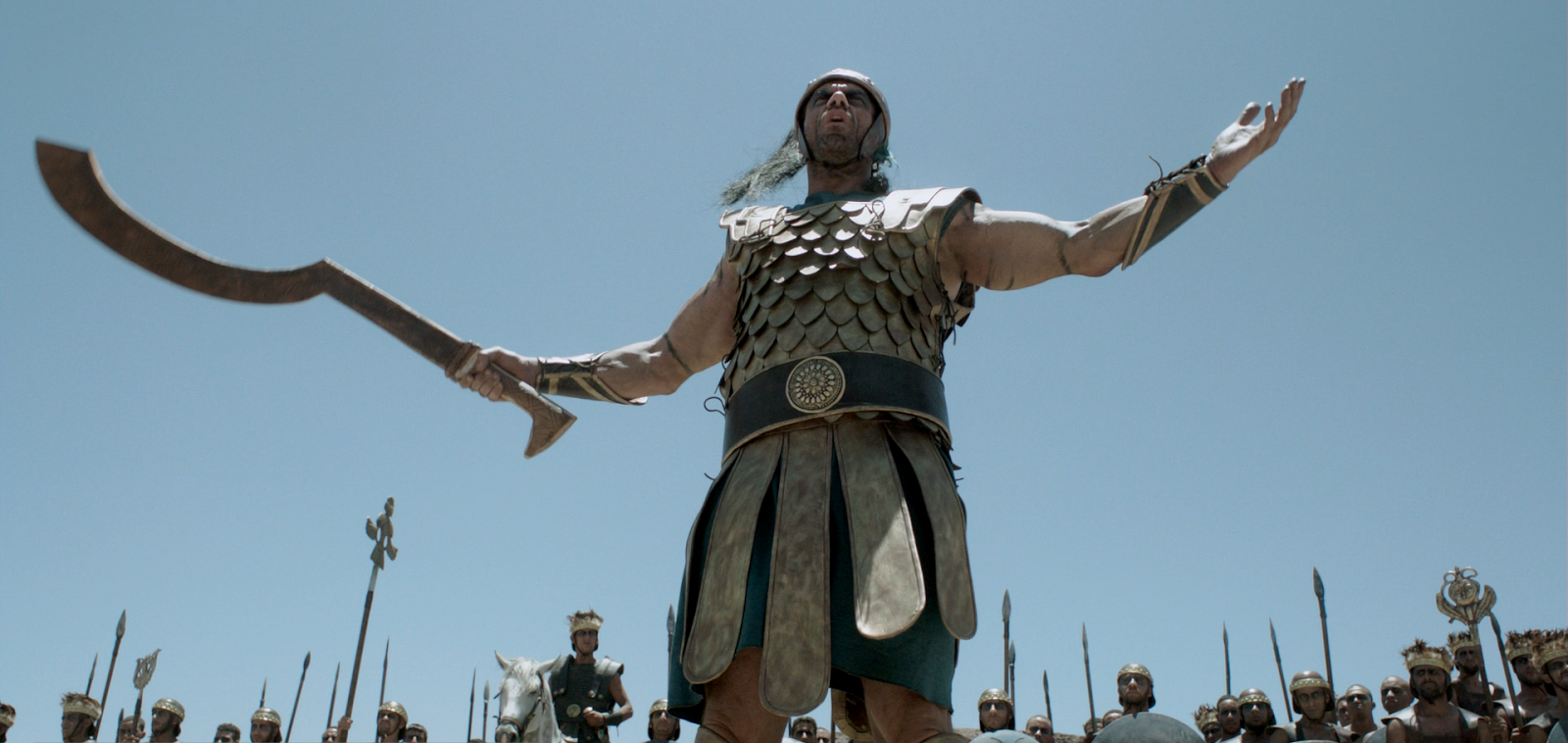
Saul and Goliath

"Goliath stood and shouted to the ranks of Israel, 'Why do you come out and line up for battle? Am I not a Philistine, and are you not the servants of Saul? Choose a man and have him come down to me... This day I defy the armies of Israel!'" (1 Samuel 17:8, 10)

Who does this guy think he is? Everyone is afraid of him. Our armies are quaking in their boots. We'll never win that way.

Why doesn't the king do something?

For me, the answer to that last question used to be quite simple: Saul didn't face Goliath because he was afraid. But recently, I remembered that at this point in the story, God had already abandoned Saul, and was with David. Therefore, David had the courage to face a giant all by himself, and Saul hid behind him.

This realization prompted me to take another brief look at Saul's story, so that I could find out why Saul was unable to defeat Goliath.

Let's start by examining why everyone would have expected Saul to be the one to face Goliath.
1. Having someone fight their battles was the reason Israel asked for a king in the first place.
"But the people refused to listen to Samuel. 'No!' they said. 'We want a king over us. Then we will be like all the other nations, with a king to lead us and go out before us and fight our battles.'" (1 Samuel 8:19-20)
2. God himself had placed that purpose on Saul's life.
"About this time tomorrow I will send you a man from the land of Benjamin. Anoint him ruler over my people Israel; he will deliver them from the hand of the Philistines. I have looked on my people, for their cry has reached me." (1 Samuel 9:16)
3. Who better to fight a giant than the tallest man in Israel?
"They ran and brought [Saul] out, and as he stood among the people he was a head taller than any of the others. Samuel said to all the people, 'Do you see the man the Lord has chosen? There is no one like him among all the people.' Then the people shouted, 'Long live the king!'" (1 Samuel 10:23-24)
The first time around, God chose someone to suit the interests of the people. Someone who was grand in stature and mighty in battle. It was what Israel had asked for. However, Saul soon became too interested in suiting people.

A little way into his reign, Saul assembled a campaign against the Philistines, and since he wanted to seek God's favor through the offering of a sacrifice, he waited for Samuel.
And waited.
And waited.
For all we know, he may have kept waiting if it weren't for one thing: his troops started leaving him. It would seem that, even though he was waiting to seek God's favor, Saul was actually relying on his great army. So he offered the sacrifice himself. And of course, that was the moment when Samuel arrived, catching him red-handed.
Saul had placed his faith in his army more than in God. That led him to disobey God's command. As a result, he was told that his kingdom would not endure. Someone else (a man after God's own heart) had been appointed ruler in his stead (1 Samuel 13:14).

However, God was still using Saul, and was still with him. He hadn't anointed David yet. "After Saul had assumed rule over Israel, he fought against their enemies on every side: Moab, the Amonites, Edom, the kings of Zobah, and the Philistines. Wherever he turned, he inflicted punishment on them. He fought valiantly and defeated the Amalekites, delivering Israel from the hands of those who had plundered them." (1 Samuel 14:47-48). If only that verse could have been Saul's legacy! However, in chapter 15, God gives Saul a mission: completely destroy the Amalekites.

Unfortunately, that is where Saul made his next mistake. God gave him specific instructions, and Saul didn't obey them. His disobedience this time is prompted by the same fear as the first time:
"Then Saul said to Samuel, 'I have sinned. I violated the Lord's command and your instructions. I was afraid of the men and so I gave in to them." (1 Samuel 15:24).

Once again, Saul put man's opinion and expectation above God's, which led to disobedience. It was then that God rejected Saul as king over Israel (in 1 Samuel 15:26), and left him.

Fear of man. As Saul's story illustrates, it is a dangerous attitude to take; a dangerous thought to listen to. And yet, it is very easy to do so. For whatever reason, man's opinion tends to hold a high place in our hearts. I know it does in mine. Man's reward when your behavior pleases him is instantaneous. It's nice to be the center of attention, and so we want to stay there.

And yet that is one of the main differences between Saul and David. David did not care what people thought of him. His focus was entirely on God. So when David saw a man that everyone around him was afraid of, he instead considered his God and thought, "Yeah, this guy doesn't stand a chance." Whereas Saul was thinking, "I don't stand a chance." Saul was afraid of men. That is what his legacy is.

Yet, there is another reason why Saul didn't face Goliath and David did:
"The Spirit of the Lord departed from Saul, and a harmful spirit from the Lord tormented him." (1 Samuel 16:14)
"So Samuel took the horn of oil and anointed [David] in the presence of his brothers, and from that day on the Spirit of the Lord came powerfully upon David." (1 Samuel 16:13)
Who in their right mind would go out to face a giant knowing for a fact that God was not with him? Whereas David, on the other hand, had not only been told that God was with him, but he had experienced it.

So what's the takeaway for us? It's true that most of us don't have battles to fight or giants to slay, but each of us still has the daily choice to put man's opinion of us above God's or below it. The choice is simple, and most of us probably know which one is the right choice to make. But as Saul learned, it is not easy. So how do we do it?

First, I encourage you to take a step back and think about this story again, and take special note of the evidence of God's grace, both for Saul and for David.

For Saul, God's grace is evident in the many warnings and opportunities he was given to get things right. But instead of learning from his mistakes, Saul chose instead to rely on man's strength, and try and meet man's expectations. God does the same for us when we make mistakes. He tells us, and gives more opportunities to grow. Our job is to be teachable.

For David, God's grace is evident in the battles he faced with lions and bears during his time as a shepherd (See 1 Samuel 17:34-36). You see, God knows us and our weaknesses. He accommodates our need to grow gradually in our faith by starting us off with the small stuff. Now, in the moment, I'm sure battling lions and bears must have been terrifying for David. But it served to teach him just how powerful his God was, which resulted in him growing in his faith, and in his confidence that God would deliver him.

So when we're facing situations that test our faith, we should let ourselves be reminded of the times that God has proven himself to us in the past. And when we face situations that we could easily handle on our own, we should stop and consider it as an opportunity to see what will happen if God is in charge instead. That way,w we're faced with something truly impossible, we'll be ready.

Thursday, November 28, 2019

Giving Thanks with David - Psalm 118

Psalm 118 is one of my favorites! I read it when I want to remember what God has done for me. What better day is there to do that than Thanksgiving?

We'll walk through the entire Psalm together. There's going to be a lot of other Bible verses scattered in there, too, so settle back for a good read!

Verse 1 (Verse images are all from NIV. They are also linked with the Bible website, so if you click on them, you'll be taken there): 
"His love endures forever". David refers to this aspect of God quite often. I think it's the quality that awed him the most. It originates in Exodus 34, when God revealed himself to Moses. I love how in that moment, when he's introducing himself to his people, this is how God describes himself:
"The Lord passed in front of Moses, calling out, “Yahweh! The Lord! The God of compassion and mercy! I am slow to anger and filled with unfailing love and faithfulness. I lavish unfailing love to a thousand generations. I forgive iniquity, rebellion, and sin. But I do not excuse the guilty. I lay the sins of the parents upon their children and grandchildren; the entire family is affected— even children in the third and fourth generations.”

Now that seems reason enough to praise God, don't you think? It describes his love, and his goodness! But God doesn't have just a good character, he also has a good plan. He is good, and he acts good. Take a look at Romans:
"And we know that God causes everything to work together for the good of those who love God and are called according to his purpose for them. For God knew his people in advance, and he chose them to become like his Son, so that his Son would be the firstborn among many brothers and sisters. And having chosen them, he called them to come to him. And having called them, he gave them right standing with himself. And having given them right standing, he gave them his glory."

Verses 2-4: 
I read this as: "Let those whom God has chosen thank him for his love, and let those who have chosen God thank him for his love."  Let us remember that because of Jesus we have been accepted into the very nation that God called his special possession. With that in mind, read the following...
"Then Moses went up to God, and the Lord called to him from the mountain and said, “This is what you are to say to the descendants of Jacob and what you are to tell the people of Israel: ‘You yourselves have seen what I did to Egypt, and how I carried you on eagles’ wings and brought you to myself. Now if you obey me fully and keep my covenant, then out of all nations you will be my treasured possession. Although the whole earth is mine, you will be for me a kingdom of priests and a holy nation.’ These are the words you are to speak to the Israelites.” '

"But you are a chosen people, a royal priesthood, a holy nation, God’s special possession, that you may declare the praises of him who called you out of darkness into his wonderful light. Once you were not a people, but now you are the people of God; once you had not received mercy, but now you have received mercy. "

We, as God's chosen people, praise him for everything he has done! In order to do that more fully, the Psalm takes us through a few examples. With the next verse, we now start to look through the ways that God has proved his unfailing love and goodness to us.

Verse 5:
I don't know about you, but for me there's never been a time when I've reached out to God and come back empty-handed. Let us also remember the truly hopeless situation we were in before God sent Jesus, and how God answered that need by setting free all who would cry out to him: 
"When we were utterly helpless, Christ came at just the right time and died for us sinners. Now, most people would not be willing to die for an upright person, though someone might perhaps be willing to die for a person who is especially good. But God showed his great love for us by sending Christ to die for us while we were still sinners. And since we have been made right in God’s sight by the blood of Christ, he will certainly save us from God’s condemnation."

Verses 6-7: 
This truth about God is one of the most incredible I can think of. God isn't passive towards us. He has chosen to be intimately informed, and infinitely involved in our lives. He is with us in every moment. Nothing proves this so well as God's gift of the Holy Spirit:
“If you love me, keep my commands. And I will ask the Father, and he will give you another advocate to help you and be with you forever— the Spirit of truth. The world cannot accept him, because it neither sees him nor knows him. But you know him, for he lives with you and will be in you. I will not leave you as orphans; I will come to you. Before long, the world will not see me anymore, but you will see me. Because I live, you also will live. On that day you will realize that I am in my Father, and you are in me, and I am in you. Whoever has my commands and keeps them is the one who loves me. The one who loves me will be loved by my Father, and I too will love them and show myself to them.” '

Jesus didn't leave us alone when he went to be with the Father. He sent us the Holy Spirit. And because he did, we don't have to go to a tent to meet with God. Nor do we have to visit a building. We don't even have to go and see a specific person, because God's own Spirit lives inside the hearts of all who have accepted him. What a privilege! 

Looking back up at the verse from Psalm 118, I also notice that I don't really have very many enemies. I get along with pretty much everyone in my life. And even if there's someone I don't get along with, I'm not looking to triumph over them. However, even though we don't have physical enemies, we do have spiritual ones:
"For our struggle is not against flesh and blood, but against the rulers, against the authorities, against the powers of this dark world and against the spiritual forces of evil in the heavenly realms."

Those spiritual forces are our true enemies. And they may come at us with fears, worries, distractions, ridicule, and even pain. But because of what God has done, we can look on them with triumph. Because we already know who wins the war. Their time on the earth is limited, and then we will live in absolute peace.
"Peace I leave with you; my peace I give you. I do not give to you as the world gives. Do not let your hearts be troubled and do not be afraid."

We have no need to be afraid. The Lord of Heaven's Armies is on our side, and he will never ever leave us.

Verses 8-9: 
Think about all the spectacular ways that God delivered Israel from their enemies! David with Goliath (1 Samuel 17), for example. Also, the time he sent an angel to Hezekiah's enemies who slayed 185,000 men in one night (2 Kings 19). It truly is best to rely on God!
"Trust in the Lord with all your heart and lean not on your own understanding; in all your ways submit to him, and he will make your paths straight. Do not be wise in your own eyes; fear the Lord and shun evil."

"Some trust in chariots and some in horses, but we trust in the name of the Lord our God. They are brought to their knees and fall, but we rise up and stand firm."

Verses 10-13:
Another weapon that is often brought against us is lies. Lies that are spoken to us, and lies that are spoken about us. I often feel as if I'm surrounded by lies on all sides. Like they're "swarming around me like bees". But I don't have to tolerate them. I don't have to listen to those voices. The only voice that should matter to me is the voice of my Shepherd. He only speaks the truth, and he alone speaks the truth. So how do we handle the lies? Cut them off! See James 4:7 for lies we hear, and Matthew 10:24-31 for lies spoken about us:
'Submit yourselves, then, to God. Resist the devil, and he will flee from you. '
James 4:7 NIV

When we're submitted to God, every part of us is included in the bargain. That means there's no vacancy for the devil.

“The student is not above the teacher, nor a servant above his master. It is enough for students to be like their teachers, and servants like their masters. If the head of the house has been called Beelzebul, how much more the members of his household! So do not be afraid of them, for there is nothing concealed that will not be disclosed, or hidden that will not be made known. What I tell you in the dark, speak in the daylight; what is whispered in your ear, proclaim from the roofs. Do not be afraid of those who kill the body but cannot kill the soul. Rather, be afraid of the One who can destroy both soul and body in hell. Are not two sparrows sold for a penny? Yet not one of them will fall to the ground outside your Father’s care. And even the very hairs of your head are all numbered. So don’t be afraid; you are worth more than many sparrows."

We have no need to be surprised when our reputations are slandered. Jesus himself was called the prince of demons be the world. How much more should we who follow him be misunderstood or maliciously slandered! But that doesn't mean we lose hope. We have value that no man can take away. And every lie will eventually be exposed by the light, and the truth will be revealed. So let's not let the lies slow us down. And let's praise our Father of Lights and our Good Shepherd for the way he leads us down the path of truth, and for the value he has given us!

Verse 14: 
David knew the Scriptures very well. Here is another throwback to Israel's deliverance from Egypt, and is actually a direct quote from the song of Moses that he sings after Israel crosses the Red Sea (Exodus 15:2). 
The events of the first Passover, followed by the crossing of the Red Sea, and finally the claiming of the Promised Land, have been acclaimed by scholars as one of the greatest pictures in the entire Bible of Jesus and his work for us. I encourage you to read through the entire song in Exodus 15, and let it echo in your heart as you consider the blood that was shed for you, and the baptism you received when you crossed from death to life. Thank God for the amazing things he's done! Consider also the Promised Land that he is guiding us to even now. He knows the path he is bringing us on, and he won't abandon us, no matter how many mistakes we make. 
And remember that our experience--our covenant--is of infinite more worth than even the Israelites received in the wilderness. For, again, God is not separated from us even by a tent, a curtain, or a veil. He lives inside our very hearts, and he is working in us to produce the very life of his Son, just we we already saw in Romans 8:28-30. (See the discourse in Hebrews 8 for more about the superiority of our covenant to the first one).

Verses 15-18: 
Praise God for what he has done! He has truly brought us "from death to life":
“Very truly I tell you, whoever hears my word and believes him who sent me has eternal life and will not be judged but has crossed over from death to life. Very truly I tell you, a time is coming and has now come when the dead will hear the voice of the Son of God and those who hear will live."

Verses 19-21: 
Let us not forget that if we wish to be considered "righteous" by God, there is only one way. And that is Jesus.
"Jesus answered, 'I am the way and the truth and the life. No one comes to the Father except through me.'"
John 14:6 NIV

But, that one way is open to us! He hasn't just saved us, he has become our salvation!
"Jesus said again, 'Very truly I tell you, I am the gate for the sheep. All who have come before me are thieves and robbers, but the sheep have not listened to them. I am the gate; whoever enters through me will be saved. They will come in and go out, and find pasture. The thief comes only to steal and kill and destroy; I have come that they may have life, and have it to the full.'"

Verses 22-24: 
There are many sections in scripture that link this verse with Jesus (Matthew 21:42-44; Acts 4:10-12; 1 Peter 2:4-8). I have nothing really to add to what Peter, Paul, and Jesus say about Jesus being "the stone the builders rejected". I will say this, though: The Capstone is also the Master Builder. He is building out of us a house (1 Peter 2:4-5), a temple (1 Corinthians 6:19-20), a building (1 Corinthians 3:9-13), and a Church (Matthew 16:18). He is the foundation, we're the bricks. He is the builder, not us, so let us, again, rely on his skill, not our own:
"Unless the Lord builds the house, the builders labor in vain. Unless the Lord watches over the city, the guards stand watch in vain."

He does this work day by day. So today, let's rejoice in it!

Verses 25-27: 
"O Lord, save us!" This makes me think of two things: 
First: Jesus's name means "The Lord Saves". 

Second: the cry of the crowd at the Triumphal Entry was "Hosanna!" Which means "Oh, save!" (Both definitions from Strong's concordance). They then followed that cry by exactly quoting the first part of Psalm 118:26 "blessed is he who comes in the name of the Lord!". Then they grabbed palm branches, and "with boughs in hand" joined in "the festal procession up to the horns of the alter" (because we know that Jesus went straight to the Temple when he entered Jerusalem that day, as described in Matthew 21, Mark 11, and Luke 19). So this Psalm, written however many centuries earlier, well described the day when Jesus entered Jerusalem on the back of a donkey. 

Not only that, but we'll be having another "Palm Sunday" in the future:
"After this I looked, and there before me was a great multitude that no one could count, from every nation, tribe, people and language, standing before the throne and before the Lamb. They were wearing white robes and were holding palm branches in their hands. And they cried out in a loud voice: 'Salvation belongs to our God, who sits on the throne, and to the Lamb.'"

All predicted in this tiny little section of one Psalm. Isn't God incredible!? How can we express the work he has done? Here's a clue...


Verses 28-29: 
Let us give thanks to him! Let us exalt him! Let us bring to mind his goodness and love. Let us recount ways where he had been faithful. Let us dwell on his nature. Let us examine ourselves, find ourselves wanting, repent, and cry out to him for the freedom he offers. Then, let us rejoice in the grace and favor that he grants to us!


Father in heaven, your name is Holy. None can compare with you, and no one else deserves the glory that you have. You are the First, and you are the Last.
May your kingdom come. Fulfill your promises to your people once again. Bring us to your place of rest.
May your will be done on earth with the same diligence and humility as it is done in heaven.
Give us today exactly what we need, like you did for your people in the wilderness every day for 40 years. Feed our hearts and minds with your Word. Refresh us with your Spirit. Give us the sustenance and nourishment that comes from doing your will.
Forgive our sins. We know you see them, and we know you cannot excuse them. But we ask that you would choose to not hold them against us. And as you do for us, we pray that you would do the same for those who have sinned against us. Don't hold their sin against them. And teach us to do the same. For with the same measure we use, we know it will be measured to us.
We also pray that you would preserve us from the schemes of our Enemy. Lead us away from his temptations and lies. Bring your light and your voice to bear in our lives, and guide us true on the path of righteousness. Produce the life of your Son Jesus Christ in us as you change us from the inside out.
For to you belongs the kingdom, and the power, and the glory forever and ever!
Amen

I hope you got at least a little bit of the encouragement in reading this that I got by putting it together! May God's faithfulness, goodness, and love follow you as you go about the rest of your day, and the rest of your week!